Real-Time vs. Aged Debt Leads: Which Strategy Drives Better ROI?
Jul 24, 2026By McGraw Now The consumer debt relief industry is experiencing unprecedented demand. Driven by inflation, rising interest rates, and economic uncertainty,...

In the highly competitive world of B2C marketing, catching a consumer’s attention is harder than ever. Customers are inundated with irrelevant ads, generic emails, and broad-stroke direct mail campaigns. In 2025, consumers are craving something different: experiences that feel crafted specifically for them. In fact, fast-growing companies generate 40% more revenue from personalization than their slower-growing competitors [1].
However, true personalization requires more than just knowing a prospect’s age or zip code. It requires a deep, multi-dimensional understanding of who they are and why they buy. This is where the strategic combination of demographic and psychographic data becomes a marketer’s most powerful tool.
Demographic data provides the foundational, statistical characteristics of a population. It answers the fundamental question of who your buyer is. For decades, demographics have been the primary building blocks of marketing segmentation because the data is objective, quantifiable, and relatively easy to collect or acquire.
Key demographic data points include:
If you are selling life insurance, knowing that a prospect is a 35-year-old married father of two with a household income of $120,000 is incredibly valuable. It allows you to filter out unqualified leads and focus your budget on individuals who statistically need your product. However, relying solely on demographics can lead to dangerous assumptions. Not every 35-year-old father has the same financial anxieties, lifestyle goals, or purchasing habits.
If demographics explain who your buyer is, psychographics explain why they buy. Psychographic data dives into the psychological attributes of consumers, categorizing them based on their internal motivations rather than their external statistics.
Key psychographic data points include:
Psychographics give you the context needed to craft messaging that truly resonates. Returning to the life insurance example: one 35-year-old father might be highly risk-averse, valuing stability and long-term financial security. Another might be an adventurous entrepreneur who values flexibility and wealth accumulation. While they look identical on a demographic spreadsheet, they require entirely different marketing messages to convert.
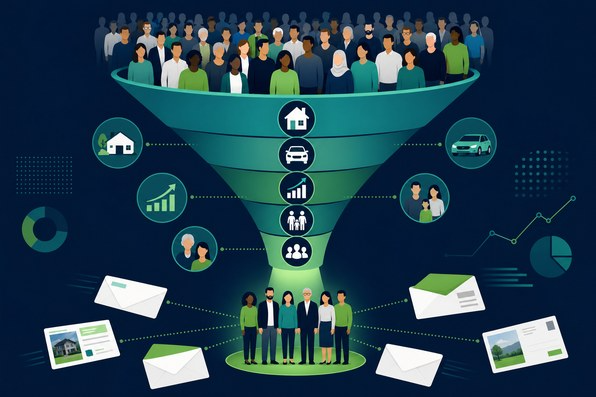
The magic happens when you layer psychographic insights over a solid demographic foundation. By combining both data types, you move from basic audience targeting to hyper-personalization.
For example, when you buy consumer data lists, you shouldn’t stop at filtering for “homeowners earning over $100k.” By working with a premium data provider, you can append psychographic filters to find “homeowners earning over $100k who are avid golfers, donate to environmental charities, and frequently purchase high-end home goods.”
This level of granularity allows you to tailor your creative execution perfectly. You know exactly what imagery to use, what tone of voice to adopt, and what specific pain points to address in your copy. When marketing messages are highly personalized, 80% of businesses report an increase in consumer spending, averaging a 38% lift [1].
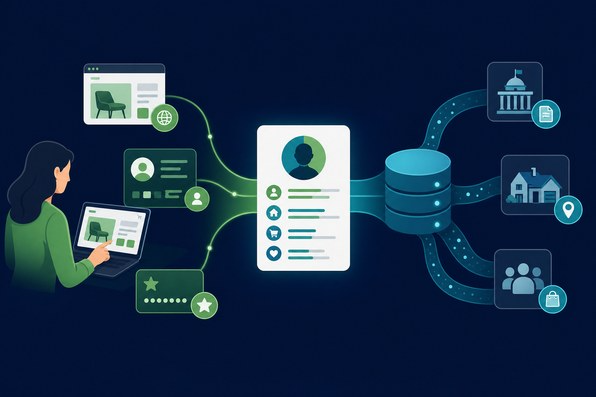
Building a target audience that incorporates both demographics and psychographics requires access to high-quality, comprehensive data. First-party data from your CRM is a great starting point, but it rarely provides the deep lifestyle and behavioral insights needed for true psychographic segmentation [2].
To achieve this, marketers must leverage third-party data enhancement. If you are preparing to launch a direct mail or email campaign, learning how to build a targeted consumer mailing list is your first step. This involves taking your existing customer files and running them through a data appending process.
By partnering with McGRAW, you gain access to a master database compiled from over 100 trusted sources. We allow you to enhance your existing files or build net-new prospect lists using over 300 demographic and psychographic selection criteria. Whether you need to target by mortgage type, pet ownership, or specific hobbies, we provide the precise data attributes required to fuel your personalized marketing strategy.
In 2025, generic marketing is invisible marketing. To cut through the noise and drive meaningful ROI, you must understand both the “who” and the “why” of your target audience. By leveraging the combined power of demographic and psychographic data, you can deliver the highly personalized experiences that modern consumers demand.
[1] Contentful. (2025). 40 personalization statistics: The state of personalization in 2025 and beyond. contentful.com/blog/personalization-statistics
[2] Deep Sync. (2023). Customer Database Marketing: Everything You Need To Know. deepsync.com/customer-database-marketing

By McGraw Now The consumer debt relief industry is experiencing unprecedented demand. Driven by inflation, rising interest rates, and economic uncertainty,...
In an era dominated by digital noise, direct mail is experiencing a powerful renaissance. With overflowing email inboxes and digital...
The distinction between first-party and third-party data has become one of the most critical topics of conversation in digital marketing....